Dog-sized scorpions, dinosaur shrimp, and exoplanet collisions lead the week in science
Sized scorpions, dinosaur shrimp, and exoplanet collisions lead the week in scientific discipline

From megafauna and solid anthropods to an exoplanet that got hit so rugged it had the wind literally knocked out of it, science tidings has definitely been lively this week.
On the biological science front, a newly discovered fossil of a meter-long scorpion was the first of its large-hearted in Asia, patc scientists at present believe they have conclusively proven what killed disconnected the Mammuthus primigenius. Arizona parking area attendees were also treated to the rare emergence of "dinosaur runt" whose blood line stretches back to before the reign of the dinosaurs.
Connected the physical sciences front, researchers accept come closer than ever so before to absolute zipp, the coldest temperature physically possible for matter to reach, using an exotic state of substance and a really full-length predominate.
Knocked out in the furthest stretches of outer infinite, astronomers caught a lily-white dwarf star turning itself on and off once again spell another team discovered evidence of an exoplanetary collision that can only be described as a doozy.
Ancient Dog-Sized Scorpion Remains Found In Communist China
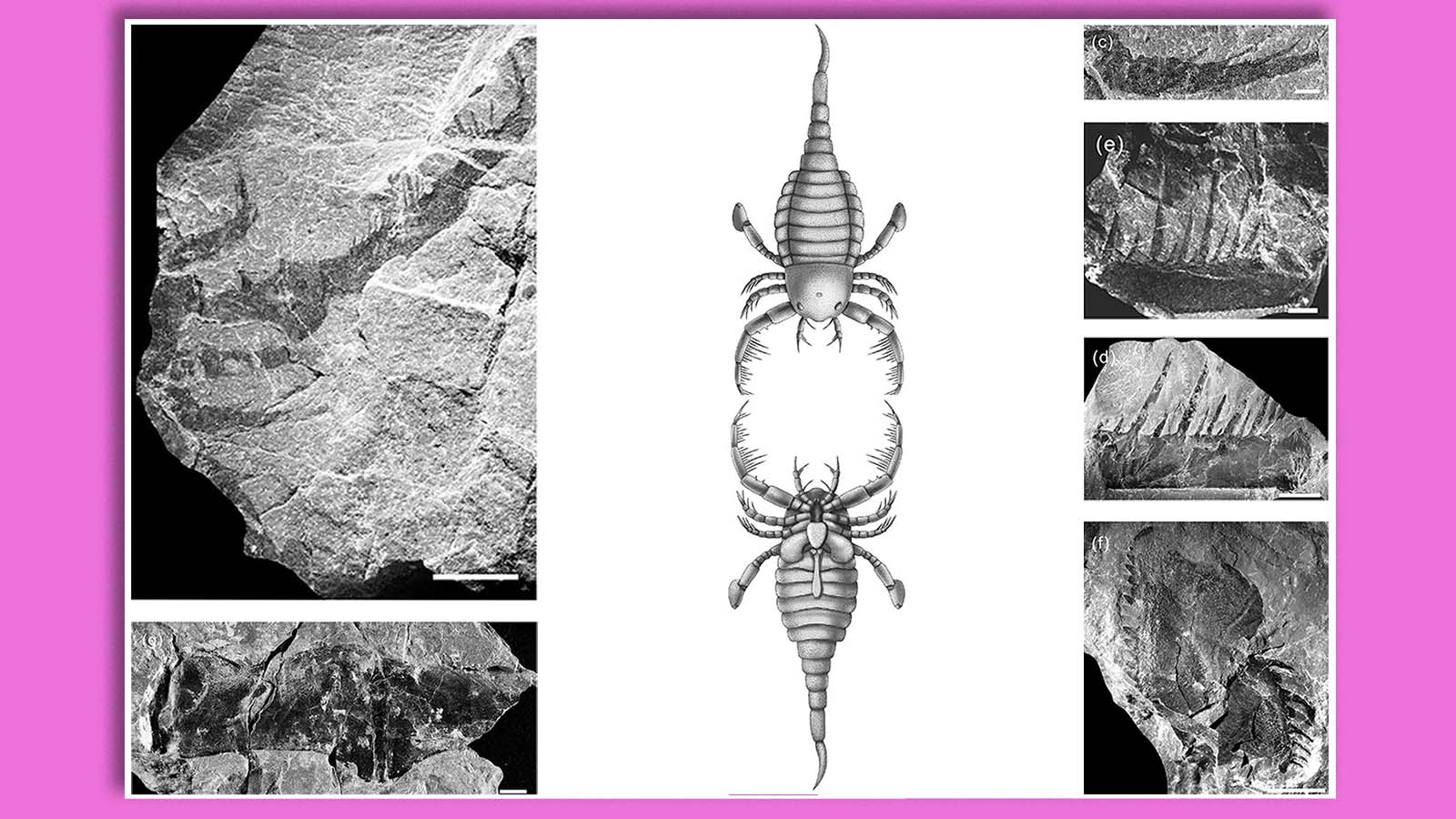
A large, prehistoric fogey of a sea scorpion was found in the Lower Silurian area of South Mainland China, the initiative time a bombastic eurypterid has been known in Asia.
The fossil, which belonged to Terropterus xiushanensis gen. et sp. nov., was a penis of the Mixopterids, a branch of eurypterids (sea scorpions) characterized by technical arms that were lined with spikey dentition that were used to gather up quarry in a terrifying, basket-like embrace.
"Our knowledge of these bizarre animals is specific to only four species in two genera described 80 years ago: Mixopterus kiaeri from Norway, Mixopterus multispinosus from NY, Mixopterus simonsoni from Estonia and Lanarkopterus dolichoschelus from Scotland," the researchers wrote in the study.
This new discovery expands on our noesis of these prehistoric sea predators, which lived between 443.8 million and 419.2 million years ago.
Man of science Achieve Coldest-Always Recorded Temperature
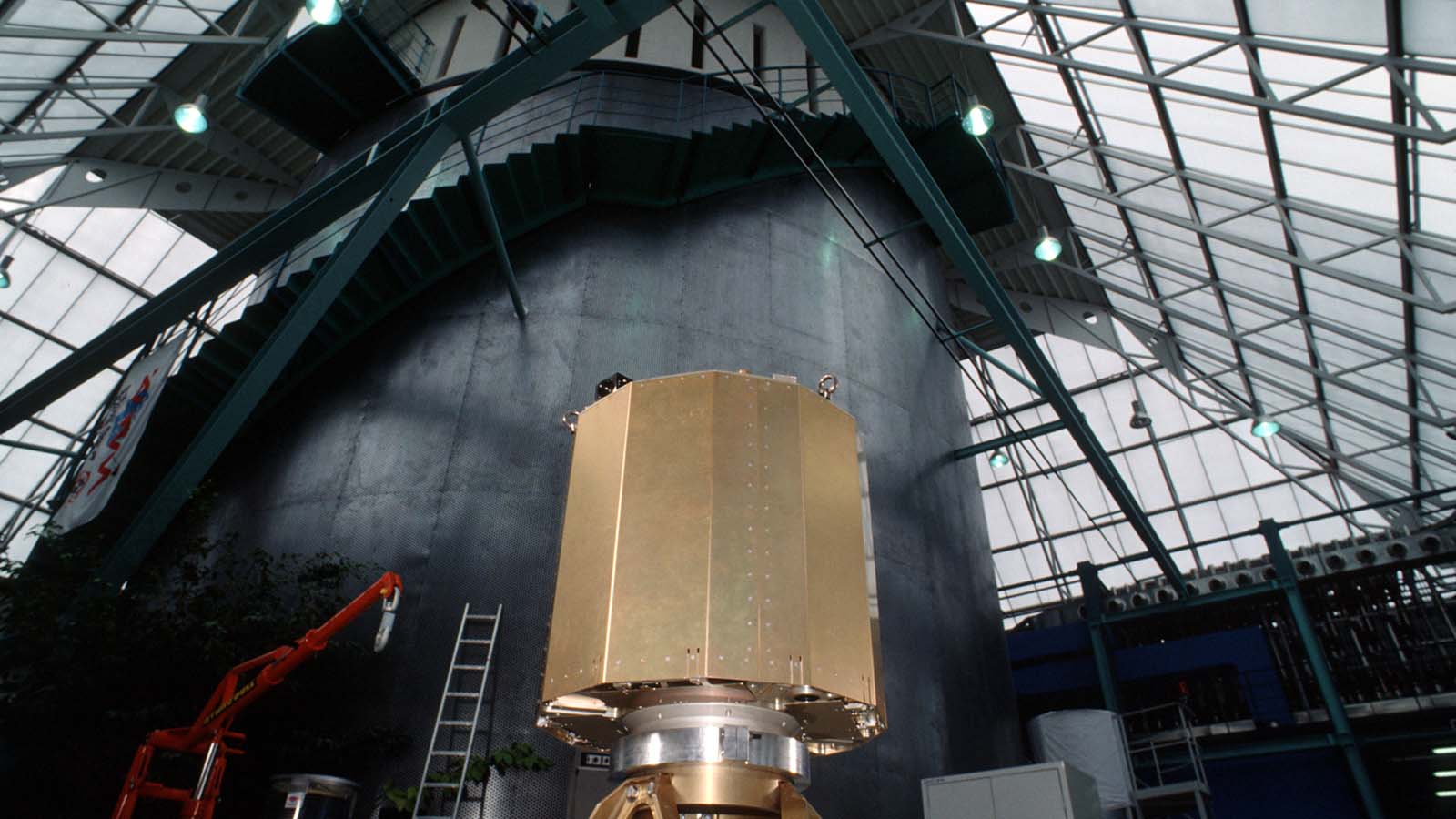
In a record-shattering experiment, scientists in FRG achieved the coldest temperature always recorded, just 38 trillionths of a degree William Thompson above inviolable zero, the physical limitation of how "cold" matter can be.
Temperature is a measure of molecular motion. The more than movement, the more molecules clash with each separate, which generates energy that we experience as heat. So, the coldest possible temperature is achieved when there is no building block motion at all, which occurs at -459.67 °F / -273.15 °C, or 0 on the Kelvin scale.
In rate to achieve a temperature of 38 picokelvins, the scientists had to personnel about 100,000 Rb atoms into an exotic state called a Bose-Einstein condensate and then simulate deep-infinite conditions using Bremen University's 120-substructure tall drop tower. You can read more about this enter-smashing experiment here.
Three-eyed 'dinosaur Runt' surprise green attendees
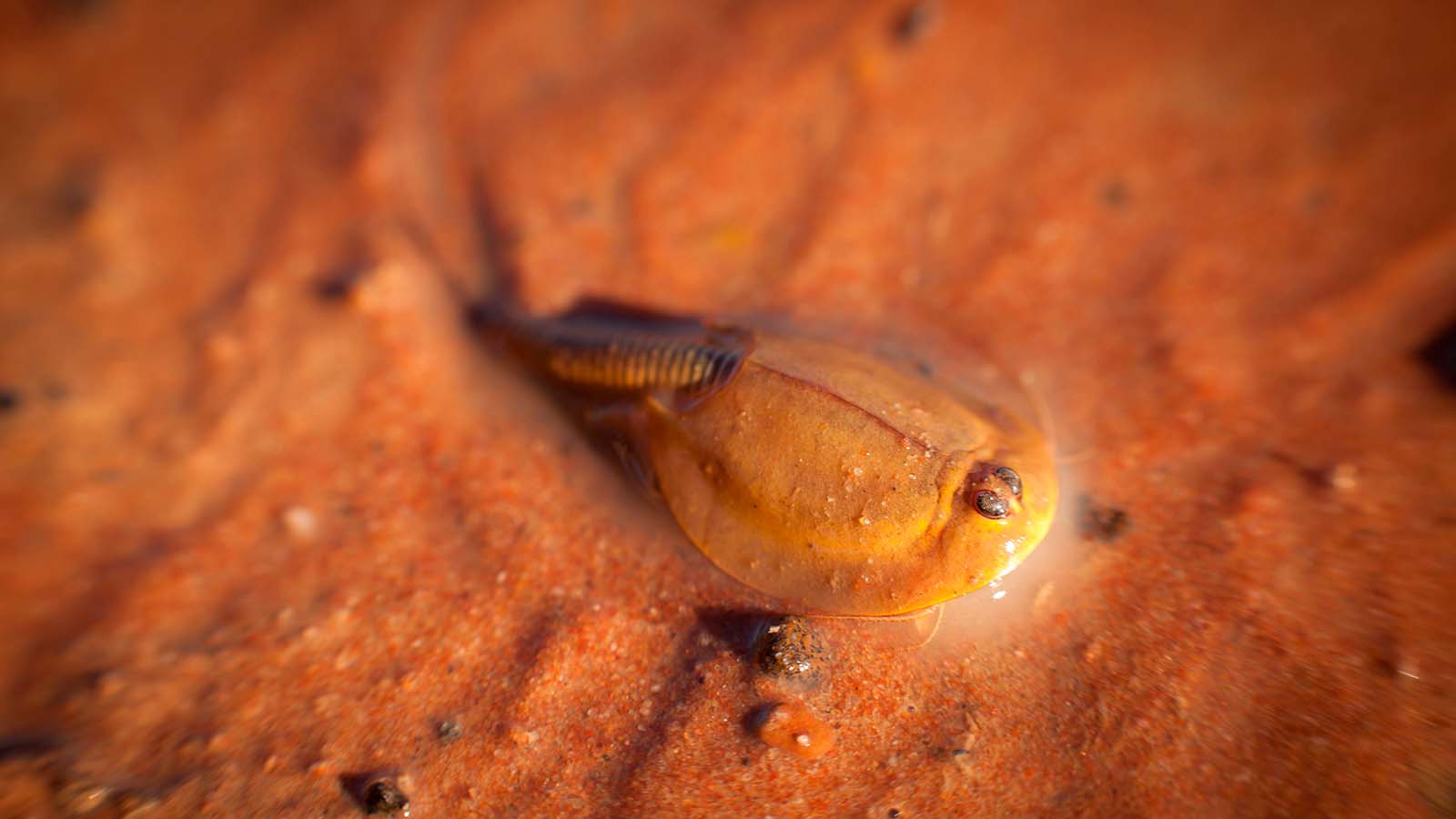
Last July, monsoon rains in Arizona led to the hatching of hundreds of three-eyed "dinosaur shrimp", delighting attendees at Arizona's Wupatki National Monument.
The longtail tadpole shrimp, officially Triops longicaudatus, were tarnished swimming in a pool created by the rains that filled up a preserved ball court at the historic site. "We knew that there was water in the ball court, but we weren't expecting anything living in IT," Lauren Howard Carter, lead interpretation ranger at the monument, told our colleagues over at LiveScience. "Then a visitor came up and said, 'Hey, you have tadpoles down in your ballcourt.'"
While sometimes referred to as a "living fogy", the verbal description isn't quite accurate. The morphology of the triops has remained largely unchanged for 70 one thousand thousand years, that doesn't entail they are the duplicate shrimp that coexisted with the dinosaurs.
"I don't like the terminal figure 'living fossil' because it causes a misunderstanding with the public that they harbor't changed the least bit," Carter said. "But they have changed, they undergo evolved. IT's evenhanded that the outward coming into court of them is very similar to what they were millions of old age ago."
Astronomers watch white shadow 'switch on and off'

Astronomers at Durham University, UK, were looking at data from NASA's Transiting Exoplanet Survey Satellite (TESS) when they spotted something significant: a white dwarf that appeared to be turn itself "on and forth" over the flow from of arsenic pocket-sized Eastern Samoa 30 minutes.
Dr. Simone Scaringi, WHO led the new research, was investigating the mechanics of material accretion around the white nanus to get a better understanding of how accretion works with to a greater extent exotic, and thus rarer, objects care black holes and neutron stars when she spotted the "switching" behavior.
The white dwarf star is part of a pure binary numeration system titled TW Pictoris, and the white dwarf star is suck up material from its pardner adept, making IT a expensive subject for observance accretion busy.
"In the main the accretion process does not have any chunky-term 'gaps'," Dr. Scaringi told TechRadar. "What generally happens in these types of systems is that the donor star in orbit just about the white dwarf keeps feeding the accretion disk. As the accretion phonograph record material slow sinks nigher towards the white dwarf star it more often than not becomes brighter, and sooner or later makes it onto the livid dwarf surface."
Scaringi believes that something or so the white dwarf star's flux is acting As a variety of attractable gate chemical mechanism that hasn't been ascertained before.
"Formerly the quantity of material has nearly drained out only, this is when so-called 'magnetic-gating' acts: the spinning magnetospheric roadblock of the hot dwarf prevents left-over platter material from just accreting swimmingly, but instead regulates the amount that lands onto the covered dwarf in 'fits and starts'.
"As it takes months to drain a disk out, beholding TW Pictoris drop by brightness in 30 proceedings was totally unexpected," Scaringi told America. "What we cerebrate may cost happening in TW Pictoris is that rather of the record being drained out so fast, we are seeing some screen of reconfiguration of the white dwarf magnetic flux, which promptly pushes the inner-disk edge outward, and thus makes information technology fainter."
Climate variety swarm woolly mammoth extinct
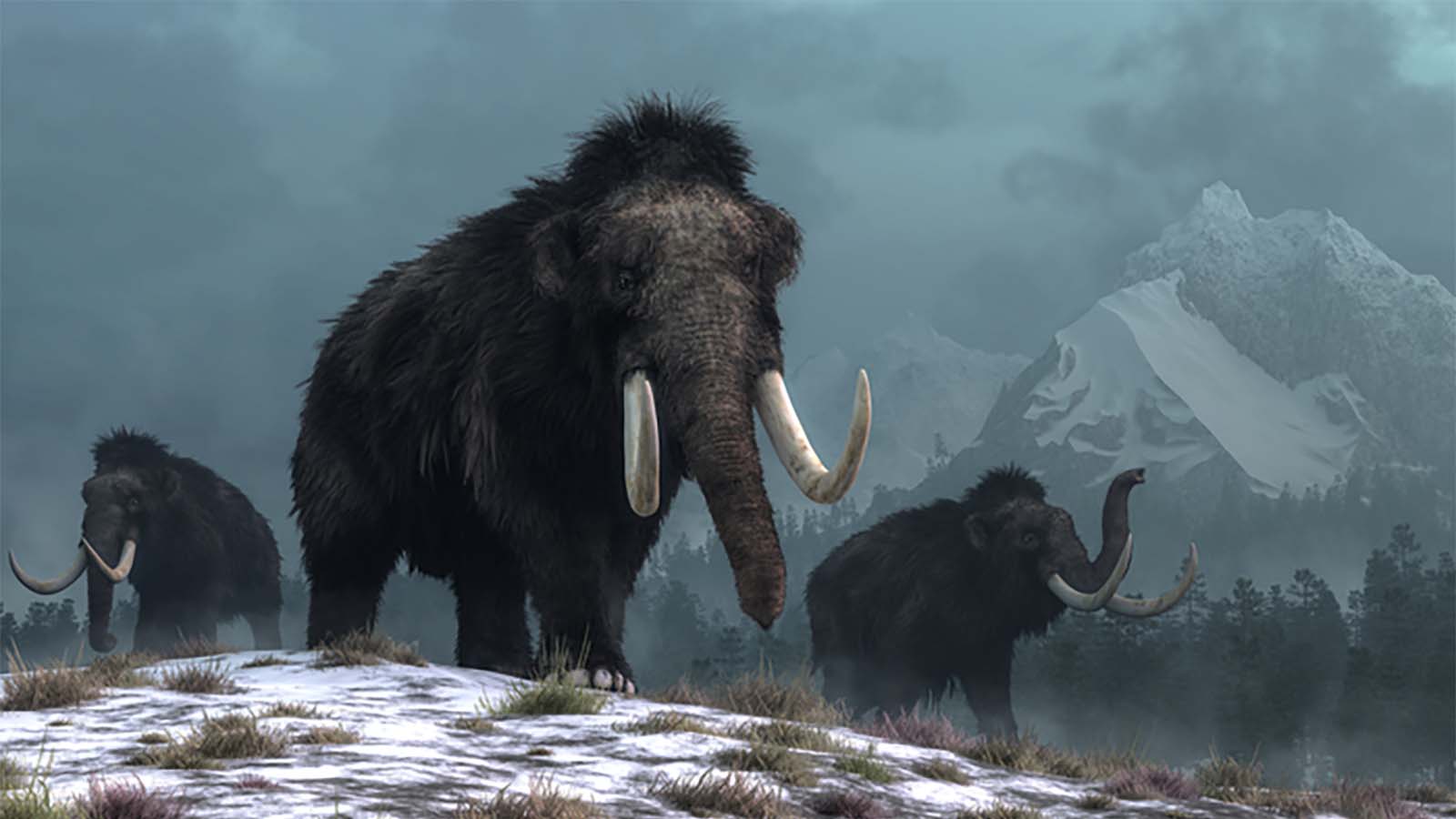
Woolly mammoths accept been a subject of endless captivation for humans ever so since their uncovering in 1796, only there has been a hot debate in the past hundred eld particularly about what drove chisel these cousins of the modern elephant to experimental extinction. Now, an complete study of about 20 eld worth of biological samples says that the woolly gigantic succumbed to climate change, not hominine action.
"Scientists have argued for 100 years about why mammoths went nonextant," said Professor Eske Willerslev, director of The Lundbeck Foundation GeoGenetics Centre, University of Copenhagen, and a Fellow of St John's College, University of Cambridge.
"Humans have been blamed because the animals had survived for millions of years without climate change killing them off before, but when they lived alongside humankind they didn't last long and we were accused of hunt them to death.
"We have finally been able to demonstrate was that IT was not just the climate changing that was the problem, only the bucket along of it that was the final nail in the coffin – they were not able to adapt quickly enough when the landscape dramatically transformed and their food became scarce."
Eastern Samoa the glaciers melted after the last ice age, the change in climate was indeed drastic that the snowy steppes and the alcoholic-scrabble plant life that sustained the massive herds of the megafauna disappeared. What replaced it was a bed wetter tundra with radically different plant animation that was ill-suited for the large mammoth herds.
Plane though humans are technically exonerated in the end of the woolly gigantic, that doesn't mean there aren't important lessons to draw from the mammoths demise.
"IT is a stark lesson from story and shows how unpredictable climate commute is," professor Willerslev said, "one time something is lost, there is no active back. Precipitation was the cause of the extinction of woolly mammoths through and through the changes to plants. The transfer happened so quickly that they could not adapt and evolve to survive.
"It shows nothing is guaranteed when it comes to the impact of dramatic changes in the windward. The early humans would own seen the world variety beyond all recognition – that could easily happen again and we cannot take for granted that we will even be around to witness it. The entirely thing we can predict with any certainty is that the vary will be massive."
Exoplanet has ambience stripped by collision

This week, astronomers announced that they've found evidence of an exoplanet collision so powerful that it stripped the impacted planet of a huge part of its atmosphere.
The planet dubitable is in the star system HF 172555, which hosts a comparatively young star, which is only about 23 million years old. The arrangement is in particular interesting since there is still active planetary formation taking place, and an examination of the amount of gas among the protoplanetary rubble reveals tough evidence of a violent collision in the past past.
Aside perusal the add up of carbon monoxide (CO) present in the debris disk approximately the star, which is typically humble knock down by stellar radiation pretty quickly, the astronomers found that close to 200,000 years ago, a collision between an earth-ferret-sized planet and a little impactor occurred that stripped the larger satellite of a huge clump of its Cobalt atmosphere.
For comparison, the sum of money of CO gas in the disk indicates that a volume equivalent to around 20% of Venus' atmosphere was stripped-down off by the collision and thrown into orbit around the champion.
"This is the first time we've detected this phenomenon, of a bare protoplanetary atmosphere in a big impact," says Tajana Schneiderman, a graduate student in Massachusetts Institute of Technology's Department of Earth, Atmospheric and Planetary Sciences and lead author of the other study, which was published this week in the journal Nature. "Everyone is interested in observing a goliath impact because we expect them to be common, simply we don't have evidence in a lot of systems for IT. Now we have additional insight into these kinetics."

John (He / Him / His) is TechRadar's Computation Staff Writer and is also a computer programmer, gamer, activist, and Brooklyn College alum currently livelihood in Brooklyn, NY. Named away the CTA as a CES 2020 Media Trailblazer for his science and technology reporting, John specializes in all areas of data processor science, including manufacture news, hardware reviews, PC gambling, every bit well as generic science composition and the social impact of the tech industriousness. You can find him online on Twitter at @thisdotjohn Currently playing: Backrest 4 Blood, Metroid Dread, EVE Online
Dog-sized scorpions, dinosaur shrimp, and exoplanet collisions lead the week in science
Source: https://www.techradar.com/news/dog-sized-scorpions-dinosaur-shrimp-and-exoplanet-collisions-lead-the-week-in-science

Posting Komentar untuk "Dog-sized scorpions, dinosaur shrimp, and exoplanet collisions lead the week in science"